Domains have become real estate for the internet. People buy short, catchy names for pennies and resell them for thousands. Others hunt for the perfect name to launch a business. Either way, the rules of the game stay the same.
This guide walks you through both sides of the deal. You will learn how to buy a domain at the right price, spot one with resale value, set a fair asking price, and close the sale without losing money to scammers.
What you will pick up:
- How the domain market actually works
- Where to buy domains (registrars, auctions, aftermarket)
- The factors that decide a domain’s value
- A clear step by step buying process
- A clear step by step selling process
- How to spot scams and protect your money
- Real sales data from verified deals
Whether you want one good name for a project or a small portfolio for income, this hands on walkthrough will get you there.
Table of Contents
Key Takeaways
- A domain can cost under 15 dollars or sell for millions, depending on demand and rarity.
- You can buy from registrars, auctions, or directly from current owners.
- Short, brandable .com names hold the strongest resale value.
- Always use an escrow service for any deal above 1,000 dollars.
- ICANN rules block newly registered domains from transferring to a different registrar for 60 days.
- Public sale records on free tools like NameBio show what real buyers actually paid.
Quick Answer
Buying and selling domains means trading website addresses for profit or business use. You can register a fresh domain through a registrar like Namecheap or GoDaddy, grab an expired one through an auction, or contact a current owner directly. Sales happen through marketplaces, broker networks, or private deals, with escrow handling the money safely.
Why People Buy and Sell Domains
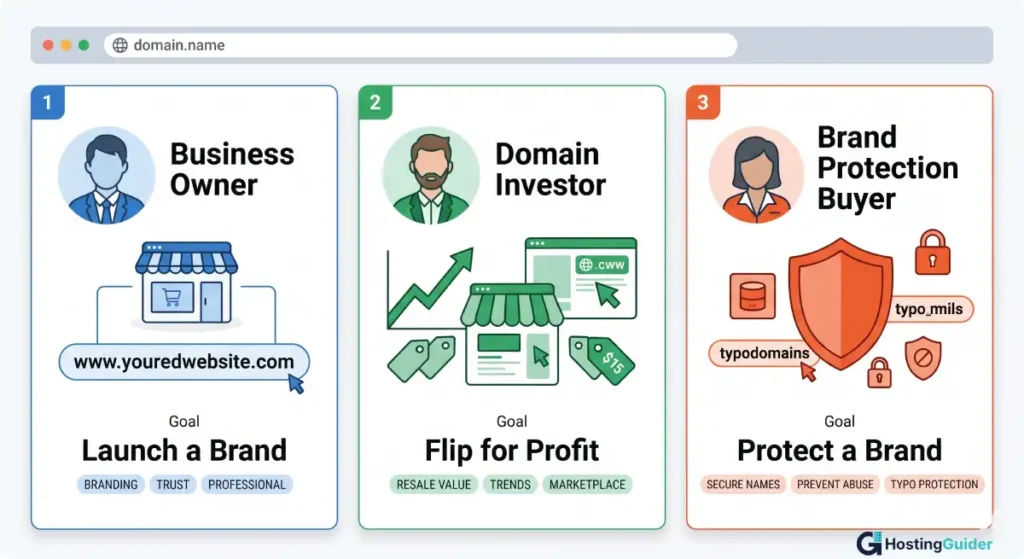
Three motivations drive almost every deal:
- To launch a business or project. The domain becomes the address, brand, and first impression.
- To resell at a profit. This is called domain flipping or domain investing.
- To protect a brand. Companies grab related names and typos to keep them away from competitors and scammers.
The first group plays the long game. The second group studies trends and looks for hidden value. The third treats domains like cheap insurance.
You can mix these reasons. Many investors buy names tied to growing industries, hold them for a year or two, and sell when demand spikes.
Part 1: How to Buy a Domain Step by Step
Buying a fresh domain takes minutes. Buying a premium or owned name takes more thought. Both follow a similar path.
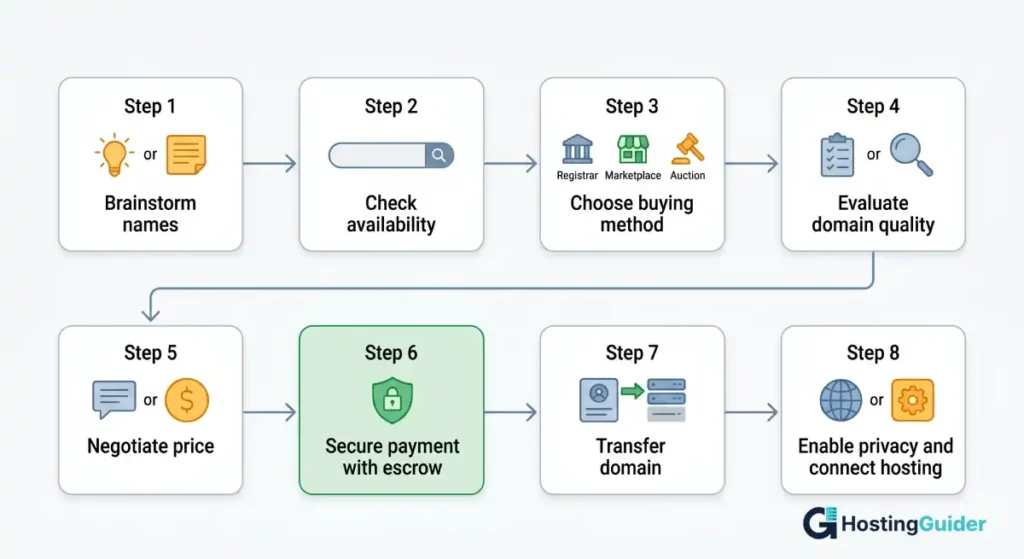
Step 1: Decide what you actually need Are you launching a business, starting a side project, or building an investment portfolio? The goal sets the budget. A side blog needs a 12 dollar registration. A serious brand might pay 5,000 dollars for the perfect .com.
Step 2: Brainstorm and research names Keep names short, easy to spell, and free of trademarks. Run candidates through a domain checker. Try variations if your first pick is taken.
Step 3: Pick where to buy Three main paths cover most cases:
- Direct from a registrar: Cheap if the name is unregistered. Examples include Namecheap, Cloudflare Registrar, and Porkbun.
- Aftermarket marketplaces: Sites like Sedo, Afternic, and Dan list domains owned by others. Prices range from 100 dollars to millions.
- Auctions: GoDaddy Auctions, NameJet, and DropCatch sell expiring or expired names. Bargains exist if you watch closely.
Step 4: Evaluate the domain before paying For premium or aftermarket names, run these checks:
- Length: Aim for 15 characters or fewer.
- Spelling: Easy to say and write without confusion.
- TLD: .com still leads. .org, .net, and a few new gTLDs follow.
- History: Check past use through a web archive tool. A name with adult content or spam history may carry penalties.
- Backlinks: Use a tool like Ahrefs or Moz to see if the domain has natural backlinks. Hidden authority can boost SEO.
- Trademark check: Search the USPTO trademark database before buying brandable names.
Step 5: Negotiate when needed Aftermarket sellers often start high. Make a polite, lower offer with a clear budget. Most sellers expect back and forth. A 30 to 50 percent reduction is realistic for unsold listings that have been on the market for a while.
Step 6: Pay safely For deals over 1,000 dollars, use Escrow.com, the service ICANN recognizes for domain transactions. The service holds the money until the transfer completes.
Step 7: Transfer the domain Once paid, the seller pushes the domain to your registrar. The transfer can take a few hours (push within the same registrar) or up to 7 days (transfer between registrars). Keep in mind the ICANN Transfer Policy locks new domains for 60 days against transfer.
Step 8: Set up the basics Turn on WHOIS privacy. Enable auto renewal. Add the domain to your hosting or a parking page so visitors do not see a blank screen.
Part 2: How to Sell a Domain Step by Step
Selling is where strategy matters. Many domains sit unsold for years because owners ask too much or list in the wrong place.
Step 1: Confirm what you own and its condition Make sure the domain sits in your registrar account. Check that it is not locked or expiring soon. Renew it for at least one year so you do not lose it during the sale.
Step 2: Estimate fair value Several factors decide the price:
- Length and memorability
- Keyword value (industry terms or trends)
- TLD (.com beats most others)
- Comparable sales
- Existing traffic or backlinks
Free tools like NameBio record actual sale prices going back years. Search for similar domains and study what real buyers paid. Avoid relying only on automated valuators, which often inflate or undershoot the number.
Step 3: Set a smart asking price You have three pricing options:
- Make Offer: Buyers send bids. Useful for unique names with hard to predict value.
- Buy It Now: A fixed price for instant sale. Best for fairly priced names.
- Auction: Time limited bidding. Works well for names with multiple interested parties.
For most beginners, a Buy It Now price in the 500 to 5,000 dollar range moves faster than huge six figure asks.
Step 4: List on the right marketplaces Spread the listing for visibility:
- Sedo and Afternic for global reach
- Dan.com for fast checkout (now part of GoDaddy)
- Atom.com for curated brandable names
- Flippa for domains with traffic or revenue
- Your own landing page if you want full control
Most marketplaces let you list the same domain in several places. The first one to sell wins.
Step 5: Promote your listing Post in domain forums like NamePros. Share on social media. Reach out directly to companies that might benefit from the name. A short, polite email beats a hard sell every time.
Step 6: Negotiate offers Treat lowball offers with patience. A buyer offering 200 dollars for a 5,000 dollar domain is testing you. Counter with a number close to your floor and explain the value briefly.
Step 7: Close the sale safely Use escrow for any deal above 1,000 dollars. Confirm the funds clear before pushing the domain. Once the transfer happens, the deal is final.
Step 8: Pay attention to taxes Profit from a domain sale counts as income in most countries. Keep records of your costs and sale price. A short conversation with a tax professional saves headaches later.
Domain Valuation Cheat Sheet
A simple way to estimate value:
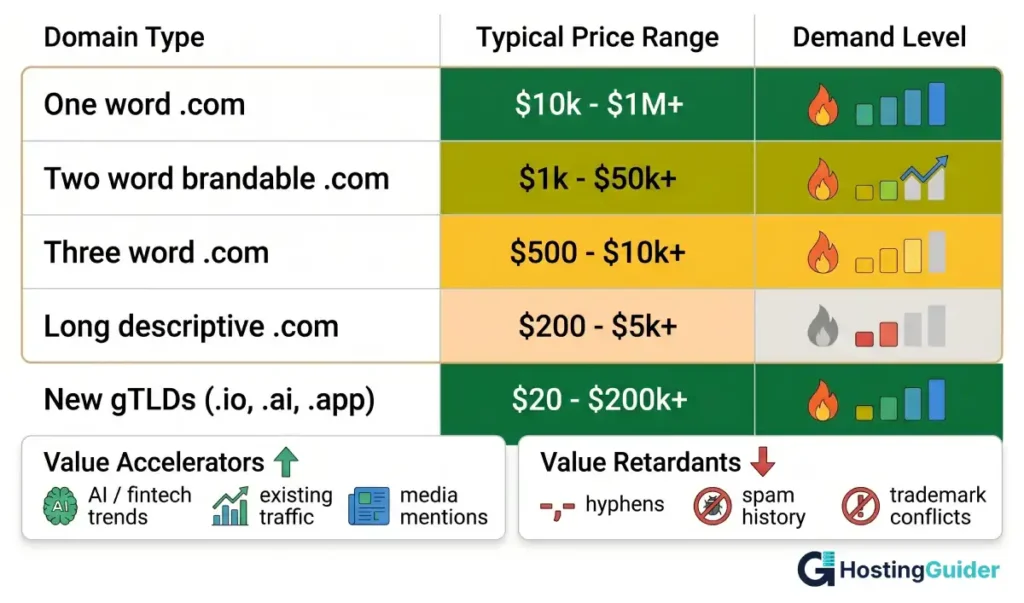
- One word .com: 5,000 dollars to millions
- Two word brandable .com: 500 to 50,000 dollars
- Three word .com: 50 to 1,000 dollars
- Long descriptive .com: 10 to 200 dollars
- New gTLD (.io, .ai, .app): Varies widely with niche demand
Adjust upward for:
- Industry boom (AI, fintech, clean energy)
- Strong existing traffic
- Brand recognition or media mentions
Adjust downward for:
- Misspellings or hyphens
- Past spam or adult content
- Trademark conflicts
Real Domain Sales for Reference
Public sales records show what domains actually trade for. Some verified examples:
- voice.com sold for around 30 million dollars in 2019, the largest publicly known cash domain sale.
- privatejet.com sold for over 30 million dollars in 2012.
- carinsurance.com sold for nearly 50 million dollars in 2010.
- insurance.com sold for around 35 million dollars in 2010.
- vacationrentals.com sold for 35 million dollars in 2007.
Most beginner sales fall between 500 and 10,000 dollars. The headline numbers come from category-leading single-word .com names that took years to find the right buyer. Use them as inspiration, not as a target.
Legal Watchouts
Domain trading has rules. Skipping them risks losing the domain and your money.
- Trademark conflicts: Buying a name that matches an existing trademark can lead to a UDRP complaint. The World Intellectual Property Organization handles many of these disputes through its arbitration center.
- Cybersquatting: Registering a name in bad faith to profit from someone else’s brand is illegal in many countries.
- ICANN transfer rules: A new domain cannot move to another registrar for 60 days after registration.
- Tax reporting: Domain sales count as taxable income. Keep clean records of every purchase and sale.
Stick to clear naming, run trademark checks, and you avoid almost every legal trap.
Tools That Make the Job Easier
A short toolkit covers most needs:
- Use our free Domain WHOIS Lookup tool to find current owners and registration dates before making an offer.
- Web archive viewers to check past use and reputation
- NameBio for historical sale data
- Ahrefs or Moz for backlink research
- Escrow.com for safe payments
- Google Trends for spotting rising keywords
You do not need every paid tool to start. Free versions handle most beginner research.
A simple domain valuation tool can also help when you compare a name against recent sales. Treat it as a starting point, not the final word on price.
Mistakes to Avoid
Beginners burn cash on the same traps:
- Paying retail for hand registered names hoping for a quick flip
- Skipping trademark checks before purchase
- Listing on only one marketplace and waiting forever
- Ignoring renewal fees on a portfolio of unsold names
- Refusing reasonable offers and holding too long
- Wiring money directly to a stranger without escrow protection
- Buying typos of major brands (a legal disaster waiting to happen)
Most of these come from impatience or skipping research. Slow down and the wins follow.
FAQ’s
How much money can you make selling domains?
Earnings vary widely. Casual sellers may earn a few hundred dollars per year. Active investors can earn thousands or more by buying smart and waiting. The biggest money sits in single word .com names, but those need patience and capital. Plan in years, not weeks.
Is buying and selling domains still profitable in 2026?
Yes, the market remains active. New industries like AI, clean energy, and crypto create demand for fresh names every year. Profit margins are tighter than they were 20 years ago, but smart buyers still find value. Focus on niches you understand and short brandable names.
How do you know if a domain is worth buying?
Check length, spelling, TLD, history, and backlinks. Compare against recent sales of similar names on NameBio. Run a trademark search to avoid legal trouble. If the name passes these checks and matches a real audience, it is likely worth a small investment.
What is the safest way to pay for a domain?
For deals above 1,000 dollars, use a recognized escrow service like Escrow.com. The service holds your money until the transfer completes. For small registrar purchases, a credit card on a trusted registrar is fine. Never wire money directly to an unknown seller.
Can I sell a domain right after buying it?
ICANN rules block transfers between registrars for 60 days after registration. You can still sell the domain inside that window, but the buyer must wait or accept a registrar push instead of a full transfer. Plan ahead if you flip quickly.
Where do most domains sell?
Top marketplaces include Sedo, Afternic, Dan.com, and Flippa. Auctions like GoDaddy Auctions and NameJet handle expiring domains. Many high value sales happen through brokers behind the scenes, not on public lists.
Do domains lose value over time?
Most generic .com names hold or gain value as the internet grows. Trendy names tied to short-term fads can lose value fast. Names linked to spam history may also drop. Strong, brandable names rarely go down in price if the niche stays active.
Final Thoughts
The domain market rewards patience, research, and a clean process. Buy names with clear demand. Use escrow for every serious deal. Keep your portfolio lean, your records tidy, and your renewals on auto.
Start with one or two names you believe in. Track what sells, study real comps, and build slowly. The investors who last in this game treat domains like a craft, not a lottery ticket.