Hostinger vs HostGator: Which Budget Host Has Actually Improved Its Infrastructure
Hostinger and HostGator are both budget shared hosting providers designed for beginners, bloggers, and small businesses. Both include a free domain, free SSL, one-click WordPress installation, and a beginner-friendly hosting experience.
The biggest difference is their infrastructure. Hostinger uses LiteSpeed Enterprise servers, NVMe SSD storage, HTTP/3, and its proprietary hPanel. HostGator relies on a traditional cPanel environment, Cloudflare’s Anycast network, phone support, and a 45-day money-back guarantee.
In our comparison, both providers passed all three mobile Core Web Vitals, achieved a Grade A SSL rating, recorded perfect 30-day uptime, and were verified as using environmentally responsible infrastructure.
Hostinger performed better in concurrent load handling, HTTP/3 support, and mobile Interaction to Next Paint (INP), while HostGator delivered stronger desktop rendering performance and Total Blocking Time (TBT).
The choice is not simply about price. It comes down to whether you prefer Hostinger’s modern hosting stack or HostGator’s more traditional platform with cPanel, phone support, and a longer money-back guarantee.
Hostinger was founded in 2004 in Kaunas, Lithuania. Its shared hosting platform uses LiteSpeed Enterprise, NVMe SSD storage, and the proprietary hPanel control panel. It also supports HTTP/3 and QUIC, although it does not offer phone support.
HostGator was founded in 2002 in Houston, Texas. It uses cPanel on its Linux shared hosting plans, integrates with Cloudflare’s Anycast network, and includes phone support, monthly billing, and a 45-day money-back guarantee. At the time of testing, its shared hosting platform did not support HTTP/3.
Quick Verdict
Hostinger wins on concurrent load handling, HTTP/3 and QUIC protocol support, and mobile INP margin.
HostGator wins on desktop TBT, desktop grade, and passing all three mobile CWV with a stronger LCP margin.
Both hold Grade A SSL. Both are verified green through Cloudflare. Both recorded perfect 30-day uptime. Both pass mobile Core Web Vitals.
Category Winners
| Category | Winner | Why |
|---|---|---|
| Mobile LCP | HostGator | 1.6s (Pass) vs Hostinger 2.2s (Pass) — HostGator has larger margin |
| Mobile INP | Hostinger | 153ms (Pass) vs HostGator 176ms (Pass) — Hostinger has larger margin |
| Mobile FCP | HostGator | 1.4s (Pass) vs Hostinger not separately recorded |
| Mobile CLS | Hostinger | 0.02 (Pass) vs HostGator not recorded |
| Mobile CWV Overall | Tie | Both pass all recorded CWV metrics |
| Global Ping (Consistency) | Tie | Both sub-10ms globally via Cloudflare Anycast |
| Desktop Grade | HostGator | Grade C (71%) vs Hostinger Grade D |
| Desktop LCP / FCP | HostGator | 737ms FCP vs Hostinger 858ms LCP |
| Desktop TBT | HostGator | 913ms vs Hostinger 3.1s |
| Desktop TTFB | HostGator | 161ms vs Hostinger not recorded |
| Concurrent Load Avg | Hostinger | 152ms vs HostGator 277ms |
| Load Reachability | Tie | Both 100% |
| Uptime | Tie | Both 100%, 0 incidents in 30 days |
| SSL Grade | Tie | Both Grade A |
| HTTP/3 | Hostinger | Supported (HTTP/3 + QUIC) vs HostGator not supported |
| Environmental | Tie | Both Cloudflare verified green |
| Phone Support | HostGator | Available vs Hostinger live chat only |
| Money-Back Guarantee | HostGator | 45 days vs Hostinger standard |
Who Should Choose Which
| Choose Hostinger if… | Choose HostGator if… |
|---|---|
| HTTP/3 and QUIC protocol support matters for your mobile audience | You want phone support available around the clock |
| You need the fastest concurrent load response under traffic surges | Desktop rendering grade and Total Blocking Time are performance priorities |
| You prefer a modern custom dashboard over traditional cPanel | You want a 45-day money-back guarantee instead of the standard 30 days |
| LiteSpeed Enterprise server architecture is important to your stack | You want standard cPanel with a transferable skill set |
| You are committing to a longer billing term for the lowest monthly rate | You want monthly billing flexibility without paying annually upfront |
| You want NVMe SSD storage confirmed across all plans | You want a familiar environment with one of the largest hosting knowledge bases on the web |
Hostinger vs HostGator: Full Feature Comparison
| Feature | Hostinger | HostGator |
|---|---|---|
| Founded | 2004, Kaunas, Lithuania | 2002, Houston, USA |
| Infrastructure | LiteSpeed Enterprise + NVMe SSD | Cloudflare Anycast CDN |
| Managed | Yes (shared + cloud + VPS) | Yes (shared + VPS + WordPress) |
| Best For | Speed-focused budget hosting, HTTP/3, LiteSpeed | Beginner simplicity, phone support, flexible billing |
| Mobile LCP | 2.2s (Pass) | 1.6s (Pass) |
| Mobile INP | 153ms (Pass) | 176ms (Pass) |
| Mobile FCP | Not separately recorded | 1.4s (Pass) |
| Mobile CLS | 0.02 (Pass) | Not separately recorded |
| CWV Overall | All recorded metrics pass | All recorded metrics pass |
| Desktop Tool | GTmetrix | GTmetrix |
| Desktop Grade | Grade D | Grade C (71%) |
| Desktop LCP / FCP | 858ms LCP | 737ms FCP |
| Desktop TBT | 3.1s | 913ms |
| Desktop TTFB | Not recorded | 161ms |
| Global Ping Best | Sub-10ms (Cloudflare) | 0.7ms Vienna |
| Global Ping Worst | Sub-110ms all nodes | 8.3ms Mumbai |
| Load Test Avg | 152ms | 277ms |
| Load Reachability | 100% | 100% |
| 30-Day Uptime | 100%, 0 incidents | 100%, 0 incidents |
| SSL Grade | A | A |
| HTTP/3 | Supported | Not supported |
| QUIC | Supported | Not supported |
| 0-RTT | Supported | Not supported |
| Green Hosting | Verified (Cloudflare) | Verified (Cloudflare) |
| Free Domain | Yes | Yes (annual plans) |
| Free SSL | Yes (unlimited) | Yes (auto-renew) |
| cPanel | No (hPanel) | Yes (standard) |
| Softaculous | Yes | Yes |
| NVMe Storage | Yes | Not confirmed |
| LiteSpeed Server | Yes | No |
| SSH Access | Yes (higher plans) | Not confirmed on shared |
| Monthly Billing | Yes (higher price) | Yes |
| Money-Back Guarantee | Standard | 45 days |
| Phone Support | No | Yes |
| Live Chat | Yes (under 3 min response) | Yes (24/7) |
| Entry Price | ~$2.99/month (48-month term) | Introductory discounted |
| Renewal Pricing | Significantly higher | Significantly higher |
How We Tested
We evaluated Hostinger and HostGator using the same independent performance, security, reliability, and network tests to ensure a fair comparison. Testing was performed against each provider’s official website: hostinger.com and hostgator.com.
Neither provider’s website blocked or altered our automated testing requests. The results reflect normal server behavior rather than responses affected by a web application firewall (WAF).
Our methodology included Google PageSpeed Insights for mobile Core Web Vitals, GTmetrix for desktop performance, K6 Load Cloud with 50 concurrent virtual users for load testing, UptimeRobot for 30-day uptime monitoring, Qualys SSL Labs for SSL configuration, HTTP/3 Check for protocol support, and The Green Web Foundation for sustainability verification.
We measured global latency using the KeyCDN Performance Test for Hostinger and the Check Host Ping Server for HostGator.
For complete individual test data, see our Hostinger review and HostGator review.
Performance: Eight Tests, Head to Head
Test 1: Mobile Core Web Vitals (Google PageSpeed Insights)
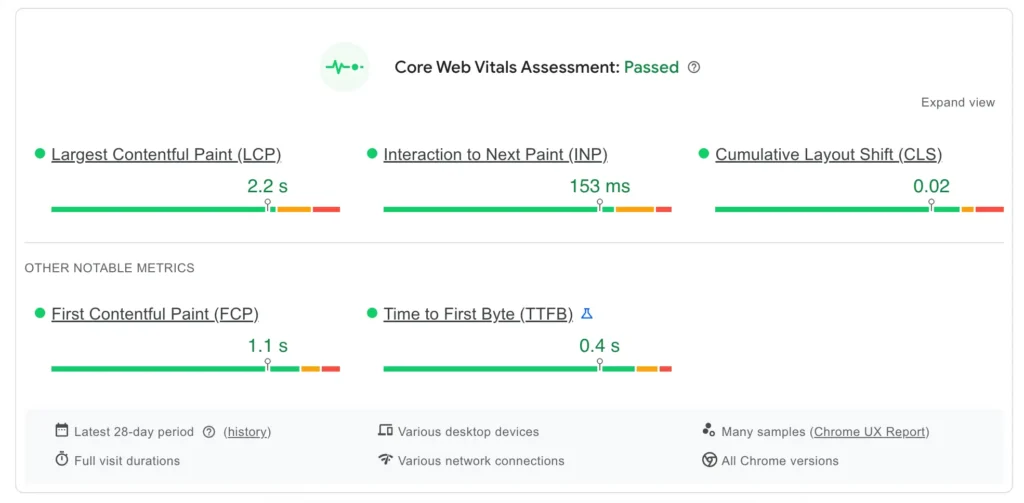
Hostinger Mobile
| Metric | Result | Google Threshold | Status |
|---|---|---|---|
| INP (Interaction) | 153ms | Under 200ms | Pass |
| LCP (Loading) | 2.2s | Under 2.5s | Pass |
| CLS (Stability) | 0.02 | Under 0.1 | Pass |
HostGator Mobile
| Metric | Result | Google Threshold | Status |
|---|---|---|---|
| LCP (Loading) | 1.6s | Under 2.5s | Pass |
| INP (Interaction) | 176ms | Under 200ms | Pass |
| FCP (First Paint) | 1.4s | Under 1.8s | Pass |
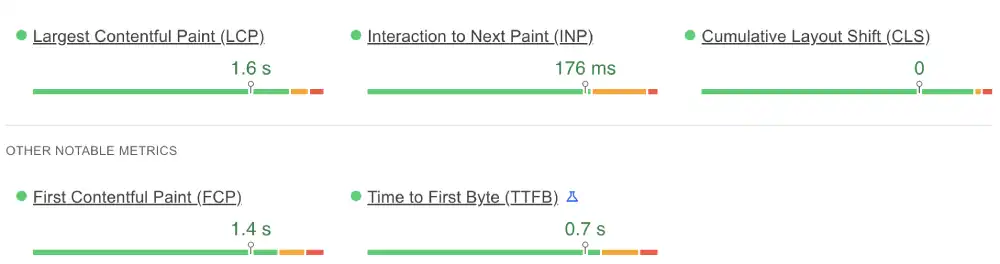
Both providers pass mobile Core Web Vitals. This separates them from most shared hosting providers in this comparison series where borderline passes and outright fails are common.
The margin comparison tells the story within the tie. HostGator’s LCP of 1.6s has a 900ms buffer before failure. Hostinger’s 2.2s LCP has 300ms. HostGator delivers the main content faster on mobile. Hostinger’s INP of 153ms has a 47ms buffer. HostGator’s 176ms has 24ms. Hostinger’s mobile interaction response is faster and more stable.
Strong mobile Core Web Vitals on the corporate domain do not guarantee the same results on a customer WordPress site. Both providers deliver these numbers on optimized corporate infrastructure. A customer site with plugin weight, unoptimized images, and theme JavaScript will perform differently. Both platforms require caching and optimization to hold these margins on real sites.
Winner: Tie on CWV overall. HostGator on LCP margin. Hostinger on INP margin.
Test 2: Global Server Latency
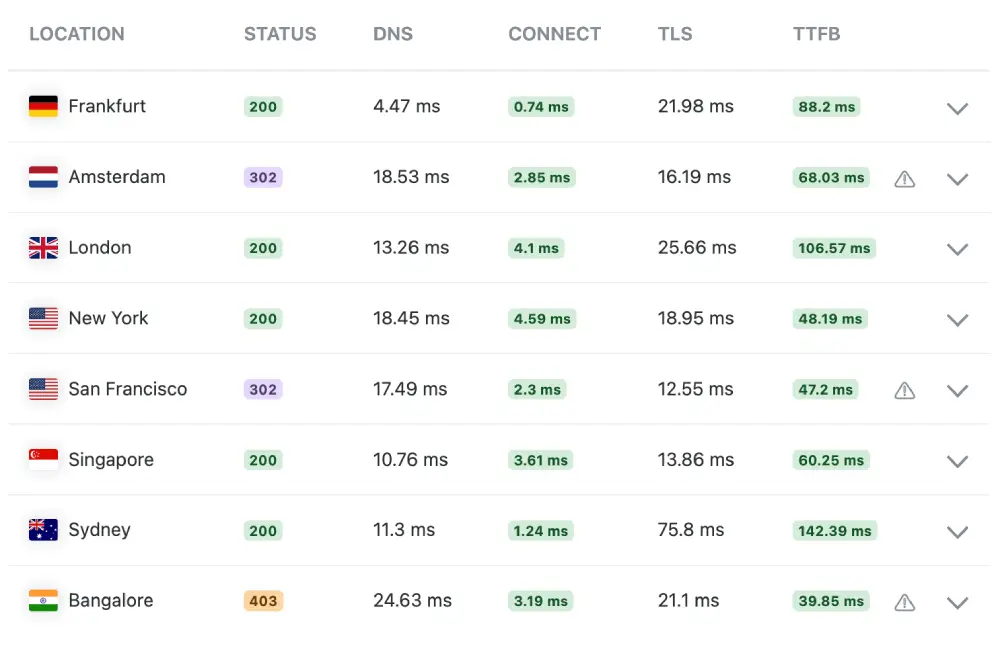
Hostinger (KeyCDN full content TTFB)
| Location | TTFB | Performance |
|---|---|---|
| New York, USA | 48ms | Blazing Fast |
| Bangalore, India | 39ms | Blazing Fast |
| Frankfurt, DE | 88ms | Optimized |
| London, UK | 106ms | Optimized |
HostGator (Check Host Ping Server, Cloudflare Anycast-routed)
| Location | Status | Ping | Performance |
|---|---|---|---|
| Vienna, AT | 200 OK | 0.7ms | Instant |
| Sao Paulo, BR | 200 OK | 1.2ms | Instant |
| Vancouver, CA | 200 OK | 1.1ms | Instant |
| Mumbai, IN | 200 OK | 8.3ms | Fast |
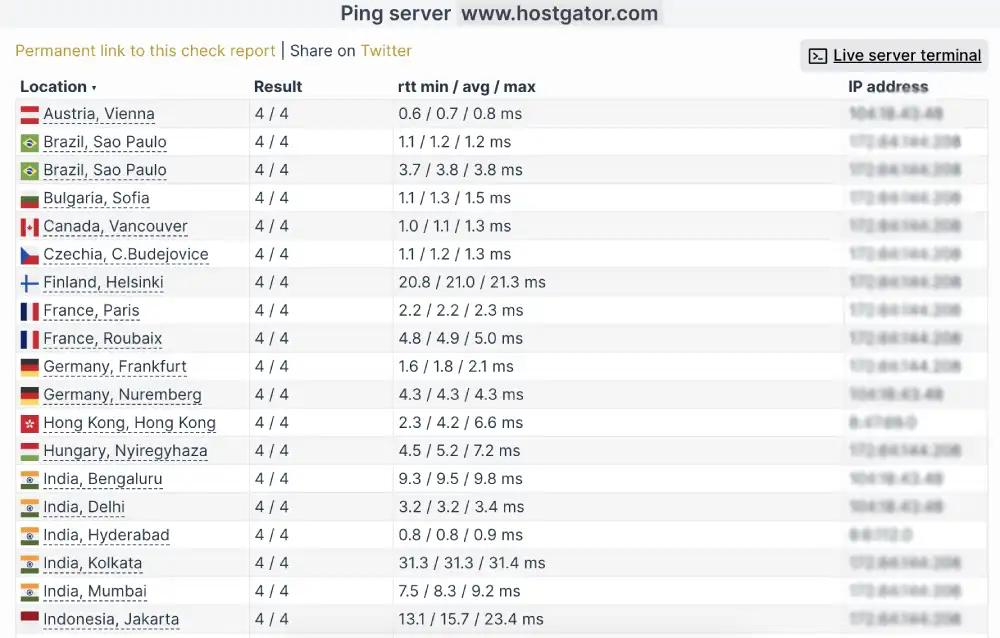
A methodology note applies here. Hostinger was tested with KeyCDN full content TTFB, which measures the time to receive the first byte of full content. HostGator was tested with Check Host ping, which measures edge node connection speed. These are different measurements and the numbers are not directly equivalent.
Both results confirm the same underlying fact: both providers deliver strong global performance through Cloudflare edge infrastructure. HostGator’s Anycast ping numbers are faster in raw milliseconds because ping measures edge acknowledgment, not content delivery. Hostinger’s TTFB numbers are full content responses that include server processing time.
What matters for a real website visitor is full content delivery time. Hostinger’s 39ms to 106ms full content range is strong. HostGator’s edge ping performance is equally strong for cached content delivery via Cloudflare.
Winner: Tie on global coverage quality. Both deliver strong global performance through Cloudflare infrastructure.
Test 3: Desktop Rendering
Both providers were tested with GTmetrix, allowing direct grade comparison.
| Metric | Hostinger (GTmetrix) | HostGator (GTmetrix) |
|---|---|---|
| Grade | Grade D | Grade C (71%) |
| Desktop LCP / FCP | 858ms LCP | 737ms FCP |
| Desktop TTFB | Not recorded | 161ms |
| Total Blocking Time | 3.1s | 913ms |
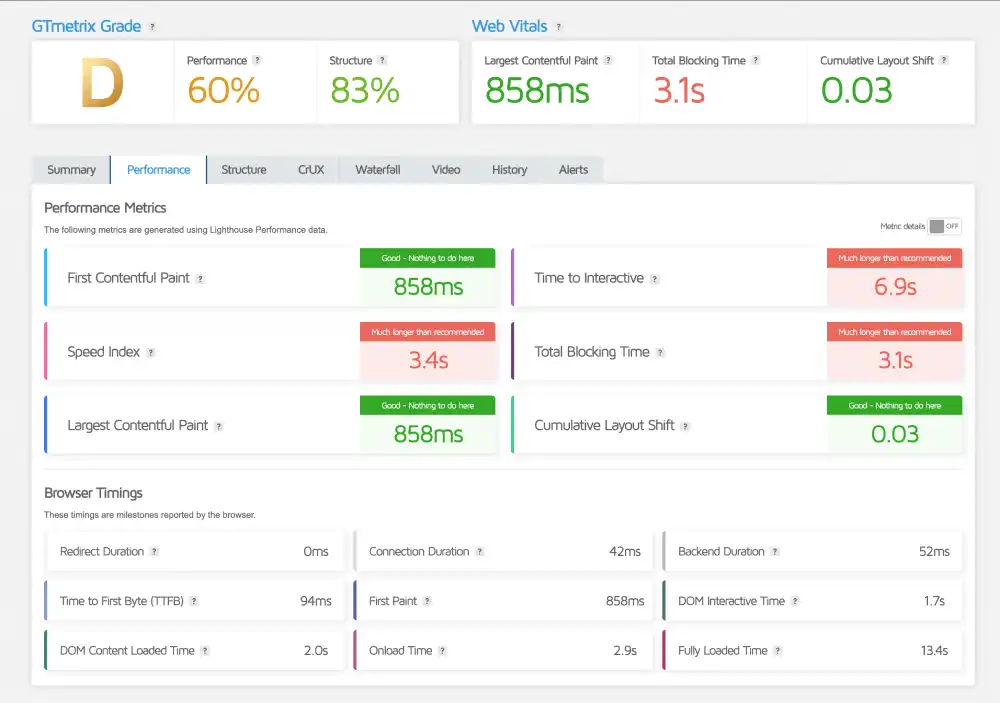
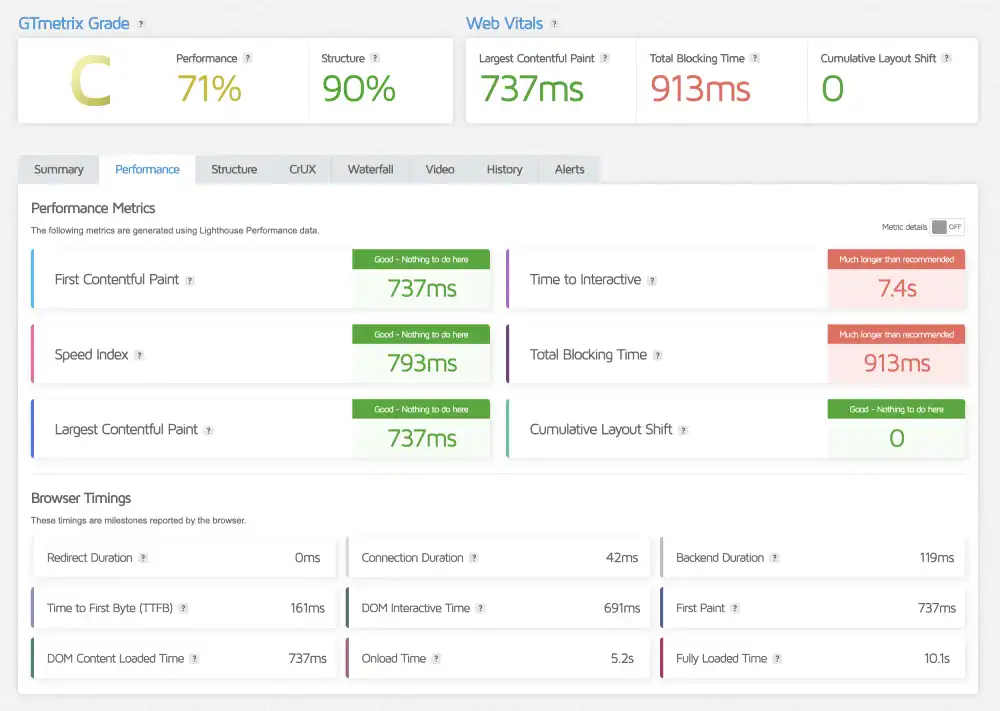
HostGator earns Grade C. Hostinger earns Grade D. The gap comes entirely from Total Blocking Time. Hostinger’s 3.1s TBT locks the browser for over three seconds after visual content appears. HostGator’s 913ms TBT is also high but less than a third of Hostinger’s blocking period.
The Hostinger review is direct about this: the Grade D is a frontend optimization issue, not a server capacity issue. JS Minification in the Hostinger plugin addresses it. The engine itself is fast.
The 858ms desktop LCP is genuinely excellent. But the GTmetrix grade reflects what the browser experiences without optimization applied, and without it, the desktop experience on Hostinger’s corporate domain is significantly worse than HostGator’s.
For a customer WordPress site on Hostinger with LiteSpeed Cache and JS Minification active, this gap closes substantially. On a raw default install, it does not.
Winner: HostGator on desktop grade and TBT. Hostinger on raw LCP speed.
Test 4: Concurrent Load (K6 Load Cloud, 50 Virtual Users)
| Parameter | Hostinger | HostGator |
|---|---|---|
| Uptime Under Load | 100% | 100% |
| Reachability | 100% | 100% |
| Avg Response Latency | 152ms | 277ms |


Both providers held 100% uptime and 100% reachability under the same 50-user concurrent load. Neither dropped a single request. The gap is entirely in response time.
Hostinger processes concurrent requests at 152ms. HostGator processes them at 277ms. The gap reflects the architectural difference directly. LiteSpeed Enterprise’s event-driven architecture handles concurrent connections without spawning a new process for each visitor, keeping response time flat under load.
Apache-based shared hosting, which HostGator uses, creates new processes per connection, which consumes more RAM under concurrent load and increases response time.
For a campaign launch, flash sale, or viral content moment where many users arrive simultaneously, Hostinger’s 152ms average means visitors receive responses nearly twice as fast as they would on HostGator.
Winner: Hostinger
Test 5: Uptime (Uptime Robot, 30-Day Monitor)
| Window | Hostinger | HostGator |
|---|---|---|
| Last 24 Hours | 100%, 0 incidents | 100%, 0 incidents |
| Last 7 Days | 100%, 0 incidents | 100%, 0 incidents |
| Last 30 Days | 100%, 0 incidents | 100%, 0 incidents |
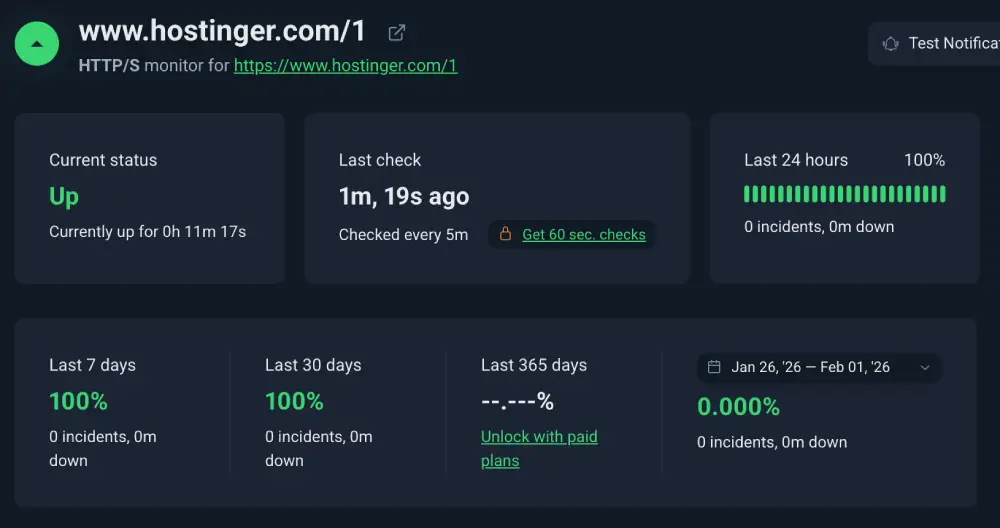
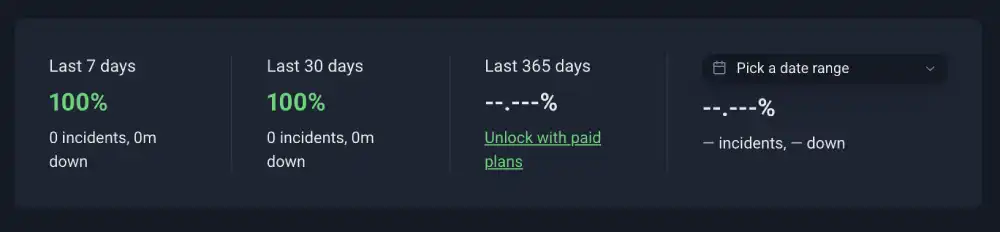
Both providers delivered perfect uptime across the 30-day monitoring window. No incidents on either platform.
Winner: Tie
Test 6: SSL Security (Qualys SSL Labs)
| Feature | Hostinger | HostGator |
|---|---|---|
| Overall Grade | A | A |
| TLS | TLS 1.3 | TLS 1.3 |
| 0-RTT | Supported | Not confirmed |
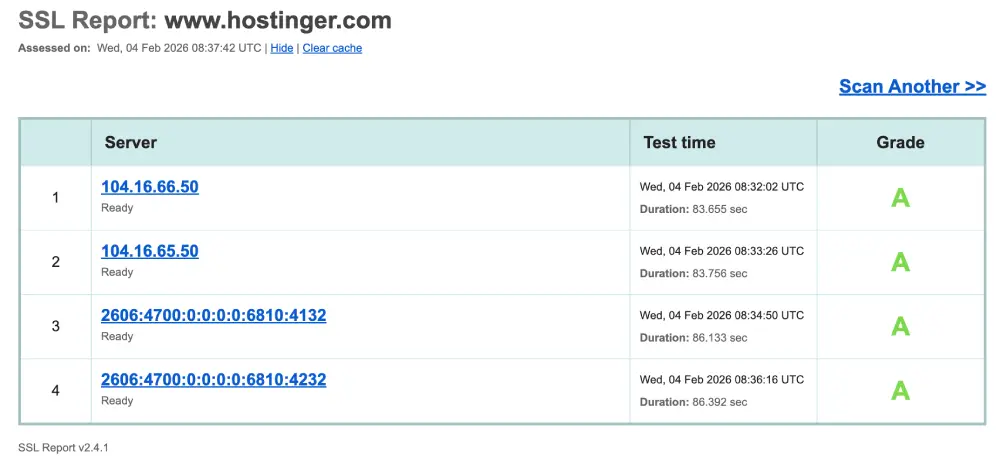
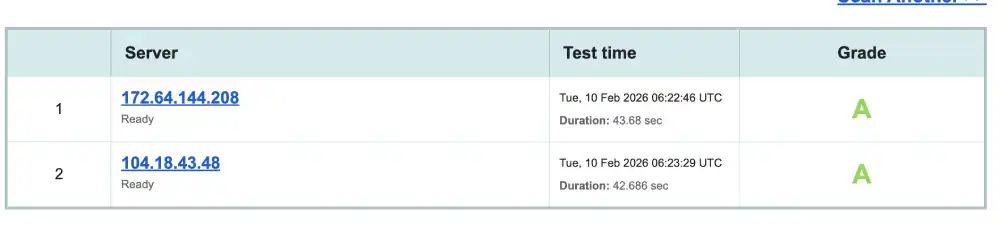
Both providers hold Grade A SSL with TLS 1.3. Hostinger’s 0-RTT support gives it an edge on returning visitor connection resumption speed, but the SSL grade itself is equal.
The Hostinger review notes that enabling HSTS in hPanel would push the grade to A+ but leaves this optional for browser compatibility.
HostGator does not make the same note, suggesting HSTS may not be available as a straightforward toggle. For a security-conscious operator, Hostinger’s path to A+ is clearer.
Winner: Tie on grade. Hostinger on upgrade path to A+.
Test 7: Protocol Support (HTTP/3 Check)
| Protocol | Hostinger | HostGator |
|---|---|---|
| HTTP/3 | Supported | Not supported |
| QUIC | Supported | Not supported |
| 0-RTT | Supported | Not supported |
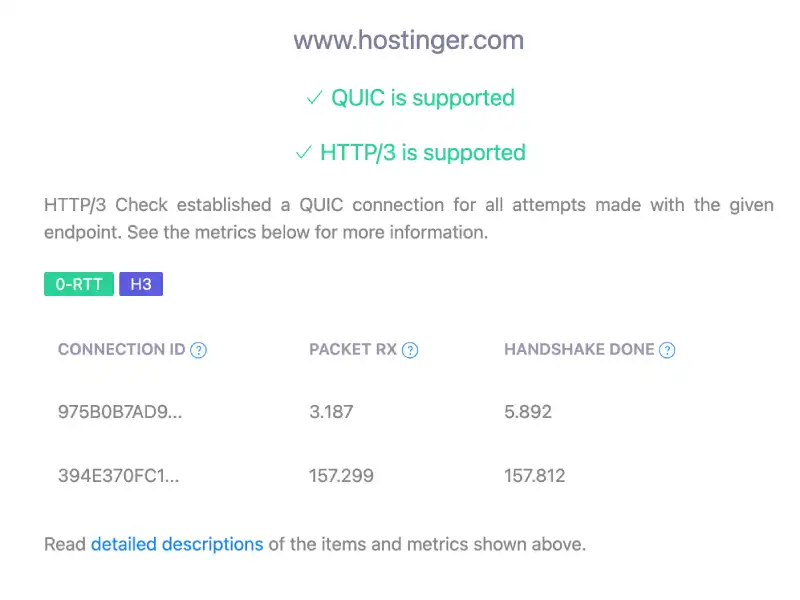
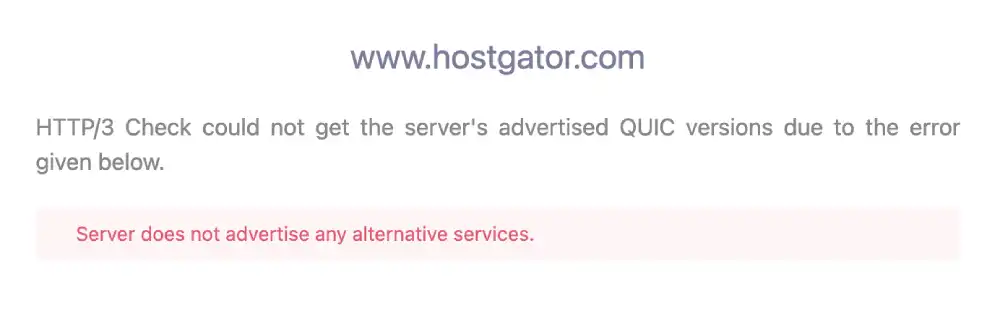
Hostinger supports HTTP/3, QUIC, and 0-RTT, while HostGator’s shared hosting does not. This is one of the most significant infrastructure differences between the two providers.
HTTP/3 uses QUIC over UDP, eliminating TCP’s transport-layer head-of-line blocking. On stable broadband connections, the performance difference is often small. On mobile networks, where packet loss and changing network conditions are more common, HTTP/3 can improve responsiveness by allowing data streams to recover more efficiently.
Hostinger also supports 0-RTT, which can reduce connection setup time for eligible returning visitors by allowing previously established secure connections to resume more quickly.
For websites with repeat visitors, such as blogs, membership sites, or WooCommerce stores, this can contribute to a faster browsing experience on supported connections.
Winner: Hostinger
Test 8: Environmental Impact (Green Web Foundation)
| Provider | Status | Source |
|---|---|---|
| Hostinger | Verified Green | Cloudflare CDN renewable |
| HostGator | Verified Green | Cloudflare CDN renewable |
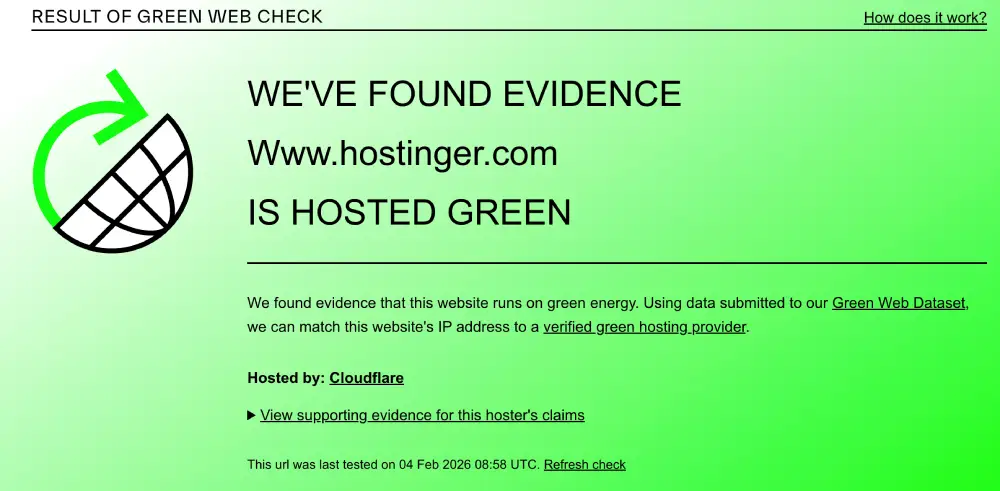

Both providers share the same green certification source: Cloudflare CDN renewable energy matching. Neither holds a direct self-funded environmental commitment beyond the CDN layer. Both are verified.
Winner: Tie
Performance Summary
| Test | Winner |
|---|---|
| Mobile CWV Overall | Tie (both pass) |
| Mobile LCP Margin | HostGator |
| Mobile INP Margin | Hostinger |
| Global Latency | Tie |
| Desktop Grade | HostGator |
| Desktop TBT | HostGator |
| Concurrent Load | Hostinger |
| Uptime | Tie |
| SSL Grade | Tie |
| HTTP/3 | Hostinger |
| Environmental | Tie |
HostGator wins three tests. Hostinger wins three tests. Five are tied.
Desktop and Mobile Speed Summary
| Metric | Hostinger | HostGator | Winner |
|---|---|---|---|
| Mobile LCP | 2.2s (Pass) | 1.6s (Pass) | HostGator (larger margin) |
| Mobile INP | 153ms (Pass) | 176ms (Pass) | Hostinger (larger margin) |
| Mobile CLS | 0.02 (Pass) | Not recorded | Hostinger |
| Mobile FCP | Not recorded | 1.4s (Pass) | HostGator |
| Desktop Grade | D | C (71%) | HostGator |
| Desktop LCP / FCP | 858ms LCP | 737ms FCP | HostGator |
| Desktop TBT | 3.1s | 913ms | HostGator |
| Desktop TTFB | Not recorded | 161ms | HostGator |
| SSL Grade | A | A | Tie |
| HTTP/3 | Supported + 0-RTT | Not supported | Hostinger |
Global Network and Load Test Summary
| Metric | Hostinger | HostGator | Winner |
|---|---|---|---|
| Global Latency Coverage | Sub-110ms all nodes (TTFB) | Sub-9ms all nodes (ping) | Tie (different measurement types) |
| Load Test Avg | 152ms | 277ms | Hostinger |
| Load Reachability | 100% | 100% | Tie |
| 30-Day Uptime | 100%, 0 incidents | 100%, 0 incidents | Tie |
The Desktop Grade Gap Explained
Hostinger’s GTmetrix Grade D does not accurately represent the performance of its hosting infrastructure. The lower score is primarily caused by frontend JavaScript on Hostinger’s corporate website rather than slow server response times.
Hostinger recorded an excellent desktop Largest Contentful Paint (LCP) of 858 ms, but its Total Blocking Time (TBT) reached 3.1 seconds because of unoptimized JavaScript. According to the Hostinger review, enabling JavaScript minification in the LiteSpeed Cache plugin can significantly reduce this blocking on WordPress websites.
HostGator’s desktop Grade C is influenced by the same type of frontend optimization, although to a lesser extent. Its corporate website recorded a TBT of 913 ms, indicating less JavaScript blocking than Hostinger’s marketing site.
The key takeaway is that corporate websites are not always representative of customer websites. Marketing pages often include analytics scripts, tracking tools, and third-party resources that reduce performance scores compared with a typical WordPress installation.
When comparing these providers, test your own WordPress website after enabling caching and frontend optimization rather than relying solely on corporate homepage benchmarks. If you choose Hostinger, configuring LiteSpeed Cache and enabling JavaScript minification should be one of your first optimization steps after installation.
Pricing and Value
Both providers use introductory pricing that rises significantly at renewal. Both require longer commitments for the lowest rates. The structure differs in ways that affect long-term cost and flexibility.
Hostinger Pricing
Hostinger’s lowest introductory price requires a 48-month commitment. Monthly billing is available, but at a significantly higher monthly cost.
The platform does not include phone support on any hosting plan, helping keep pricing competitive.
All shared hosting plans include NVMe SSD storage, LiteSpeed Enterprise servers, free SSL certificates, and a free domain with eligible plans.
Hostinger also uses its proprietary hPanel instead of cPanel, providing a custom hosting dashboard for website and server management.
Premium |
Business |
Cloud Startup |
Premium |
Business + AI |
Cloud Startup + AI |
Cloud Startup |
Cloud Professional |
Cloud Enterprise |
KVM 1 |
KVM 2 |
KVM 4 |
KVM 8 |
|---|---|---|---|---|---|---|---|---|---|---|---|---|
$3.49
/mo |
$4.49
/mo |
$9.99
/mo |
$3.49
/mo |
$4.49
/mo |
$9.99
/mo |
$9.99
/mo |
$19.99
/mo |
$39.99
/mo |
$4.99
/mo |
$6.99
/mo |
$9.99
/mo |
$19.99
/mo |
|
|
|
|
|
|
|
|
|
|
|
|
|
HostGator Pricing
HostGator offers monthly billing on all shared hosting plans without requiring an annual commitment, though the monthly rate is significantly higher than annual pricing. A 45-day money-back guarantee is available on all plans. Phone support is included at no extra cost. Standard cPanel is provided on all Linux shared plans. Free domain is included on annual plans.
Hatchling Plan |
Baby Plan |
Business Plan |
Baby Plan |
Business Plan |
Pro Plan |
Snappy 2000 – NVMe 4 |
Snappy 4000 – NVMe 8 |
Snappy 8000 – NVMe 16 |
Value Dedicated – NVMe 32 |
Power Dedicated – NVMe 64 |
Enterprise Dedicated – NVMe 128 |
|---|---|---|---|---|---|---|---|---|---|---|---|
$2.75
/mo |
$3.50
/mo |
$5.25
/mo |
$3.50
/mo |
$5.25
/mo |
$13.95
/mo |
$34.99
/mo |
$53.99
/mo |
$82.99
/mo |
$144.19
/mo |
$241.79
/mo |
$346.79
/mo |
|
|
|
|
|
|
|
|
|
|
|
|
Pricing Comparison
| Factor | Hostinger | HostGator | Winner |
|---|---|---|---|
| Lowest Monthly Rate | ~$2.99 (48-month term) | Higher (annual term) | Hostinger |
| Monthly Billing | Yes (higher rate) | Yes | Tie |
| Free Domain | Yes | Yes (annual plans) | Hostinger |
| Free SSL | Yes (unlimited) | Yes (auto-renew) | Tie |
| Money-Back Guarantee | Standard | 45 days | HostGator |
| Phone Support | No | Yes | HostGator |
| cPanel | No (hPanel) | Yes (standard) | HostGator |
| NVMe Storage | Yes | Not confirmed | Hostinger |
| LiteSpeed Server | Yes | No | Hostinger |
| HTTP/3 Included | Yes | No | Hostinger |
Who Should Use Which
Choose Hostinger if you:
- Want the lowest entry price for a long-term commitment on a budget hosting plan
- Need HTTP/3 and QUIC active on shared hosting without moving to a VPS
- Expect traffic surges where LiteSpeed’s concurrent load handling at 152ms matters
- Are comfortable with live chat support and do not need phone access
- Want NVMe SSD storage confirmed across all plans for faster database reads
- Prefer a modern custom dashboard over traditional cPanel
Choose HostGator if you:
- Need phone support available at any hour without an additional fee
- Want a 45-day money-back guarantee to evaluate the platform without time pressure
- Need standard cPanel as a transferable skill for managing hosting across providers
- Want monthly billing flexibility without committing to an annual or multi-year term
- Prefer a host with a large legacy knowledge base and decades of tutorial content
- Want better desktop TBT out of the box without requiring plugin-level optimization
Situation and Use Case Recommendations
| Situation | Recommended | Why |
|---|---|---|
| First WordPress site, beginner | HostGator | cPanel familiarity, phone support, 45-day refund window |
| Mobile-heavy audience | Hostinger | HTTP/3 + 0-RTT, 153ms INP, LiteSpeed architecture |
| Budget blog or portfolio | Hostinger | Lower entry price on long-term plans |
| Site expecting viral traffic spikes | Hostinger | 152ms concurrent load avg vs HostGator 277ms |
| Developer needing cPanel | HostGator | Standard cPanel on all Linux shared plans |
| Phone support required | HostGator | Only provider in this pairing with phone access |
| WooCommerce on a budget | Hostinger | LiteSpeed + HTTP/3 + 0-RTT for returning shoppers |
| Upgrading from shared to VPS later | Tie | Both offer VPS plans; Hostinger’s hPanel vs HostGator’s cPanel affects migration path |
| Compared to Bluehost | Hostinger | HTTP/3 and lower price vs Bluehost; HostGator matches Bluehost on CWV |
| Compared to Namecheap | Hostinger | LiteSpeed vs Namecheap cPanel for raw speed |
Final Verdict
Hostinger and HostGator are both strong budget hosting providers. In our testing, both passed all three mobile Core Web Vitals, achieved a Grade A SSL rating, recorded perfect uptime, and delivered reliable global performance.
The biggest difference is what each platform prioritizes. Hostinger focuses on modern infrastructure with LiteSpeed Enterprise, HTTP/3, and stronger concurrent load handling. HostGator focuses on usability with cPanel, phone support, monthly billing, and a longer money-back guarantee.
Choose Hostinger if performance is your top priority. Its LiteSpeed architecture, HTTP/3 support, and faster concurrent load handling make it the better choice for WordPress websites, WooCommerce stores, and projects that expect traffic growth.
Choose HostGator if ease of use is more important. Phone support, standard cPanel, monthly billing, and a 45-day money-back guarantee make it a practical option for beginners and users who value flexibility over the latest hosting technologies.
Overall, Hostinger offers the stronger technical platform for most websites, while HostGator stands out for its beginner-friendly experience and customer support.
| Category | Winner |
|---|---|
| Mobile CWV Overall | Tie |
| Mobile LCP Margin | HostGator |
| Mobile INP Margin | Hostinger |
| Global Latency | Tie |
| Desktop Performance | HostGator |
| Concurrent Load | Hostinger |
| Uptime | Tie |
| SSL Grade | Tie |
| HTTP/3 | Hostinger |
| Environmental | Tie |
Tactical Recommendations
For Hostinger: Enable JavaScript minification in LiteSpeed Cache
If you use WordPress on Hostinger, enable JavaScript minification in the LiteSpeed Cache plugin during setup. This helps reduce Total Blocking Time (TBT) caused by unoptimized JavaScript and can improve GTmetrix performance.
The lower GTmetrix score on Hostinger’s corporate website was primarily related to frontend optimization rather than server performance. Configuring LiteSpeed Cache before launching your site can help avoid the same issue.
For Hostinger: Enable HSTS for stronger SSL security
Enable HTTP Strict Transport Security (HSTS) in hPanel if your website supports HTTPS across all pages. This strengthens your SSL configuration and can improve your SSL Labs rating.
It only takes a few minutes to enable and helps ensure visitors always connect over HTTPS.
For HostGator: Install a caching plugin
Add a WordPress caching plugin such as W3 Total Cache or WP Super Cache before evaluating your website’s performance. Proper caching can significantly improve loading times compared with an uncached installation.
Measure performance using your own website rather than HostGator’s corporate homepage, since marketing websites often include scripts and tracking tools that do not represent a typical WordPress site.
For HostGator: Check whether HTTP/3 is available through Cloudflare
HostGator’s shared hosting does not natively support HTTP/3, but some Cloudflare integrations may provide HTTP/3 depending on your hosting plan and configuration.
After setting up your website, check your Cloudflare settings to see whether HTTP/3 can be enabled.
For both providers: Compare long-term costs, not just introductory prices
Review the total cost over the period you expect to keep your hosting account. Hostinger’s lowest introductory price requires a long-term commitment, while HostGator offers monthly billing at a higher monthly cost.
Comparing the total renewal cost instead of the advertised introductory price gives a more accurate picture of long-term value.
Frequently Asked Questions
Is Hostinger or HostGator better for WordPress?
Hostinger is generally the better choice for WordPress if performance is your priority. Its LiteSpeed Enterprise servers, HTTP/3 support, and stronger concurrent load handling make it better suited for faster page loads and traffic spikes.
HostGator is a better option if you prefer cPanel, phone support, and more flexible billing. Both providers passed all three mobile Core Web Vitals in our testing.
Why does Hostinger receive a Grade D in GTmetrix if it is known for good performance?
The Grade D reflects the frontend optimization of Hostinger’s corporate website, not the performance of its hosting infrastructure. The primary issue is high Total Blocking Time (TBT) caused by JavaScript on the marketing site.
The underlying server still delivered an excellent desktop Largest Contentful Paint (LCP). A properly optimized WordPress website using LiteSpeed Cache and JavaScript optimization is unlikely to produce the same GTmetrix score.
Does HostGator support HTTP/3?
No. HostGator’s shared hosting platform does not support HTTP/3 or QUIC, while Hostinger includes support for HTTP/3, QUIC, and 0-RTT.
Although HostGator uses Cloudflare’s network, its shared hosting traffic is served over HTTP/2. If you enable Cloudflare on your hosting account, available protocol support may depend on your plan and configuration.
Is Hostinger actually affordable in the long term?
Yes, if you’re comfortable committing to a long-term plan. Hostinger’s lowest introductory price requires a multi-year subscription, and renewal prices are significantly higher.
If you prefer monthly billing or greater flexibility, HostGator is a better fit, although its monthly cost is typically higher than Hostinger’s long-term plans.
Does HostGator have a better money-back guarantee than Hostinger?
Yes. HostGator offers a 45-day money-back guarantee on new shared hosting plans, giving customers more time to evaluate the service than Hostinger’s standard refund period.
Keep in mind that domain registration fees are generally non-refundable if you claimed a free domain during signup.
Which is better for a WooCommerce store?
Hostinger is generally the better choice for WooCommerce. Its LiteSpeed Enterprise architecture, HTTP/3 support, and stronger concurrent load performance make it better suited for handling dynamic ecommerce traffic.
For small and growing WooCommerce stores, these infrastructure advantages can help maintain faster product pages and checkout performance during busy periods.