If your business has sustainability commitments, your hosting should be part of that picture. Data centres are large electricity consumers. The hosting you choose contributes to that consumption.
The green hosting category has genuine providers and marketing copy providers. The difference is verification. A provider with an EPA Green Power Partner certification has their renewable energy purchase verified by a government agency. A provider with a green page on their website and no third-party verification has a marketing page.
This guide covers what the claims mean, how to verify them, and which providers have the documentation behind their statements.
What Green Hosting Claims Actually Mean
Renewable Energy Certificates (RECs): Each REC represents 1 MWh of electricity generated from a renewable source. A provider that buys RECs matching their total electricity consumption is purchasing verified renewable energy capacity equivalent to what they consume. They may not run directly on renewable energy, but they fund its generation in proportion to their use.
Carbon offsets: Funding projects that reduce greenhouse gas emissions elsewhere. Tree planting, methane capture, and clean energy projects in developing markets. The quality varies widely. Look for Gold Standard or Verified Carbon Standard certified offsets if this is important to your decision.
On-site renewable generation: Solar panels or wind installations at the data centre. Rarer and more expensive than RECs, but directly physical.
PUE (Power Usage Effectiveness): A ratio of total data centre energy to IT equipment energy. A PUE of 1.0 means all power goes to servers. Real data centres range from 1.2 (excellent) to 2.0 (poor). A provider claiming green credentials with a high PUE is negating some of their renewable benefit through inefficiency.
Third-party verification: EPA Green Power Partner, Green-e certified, B Corporation certification, or equivalent. Without independent verification, claims are self-reported.
Quick Comparison
| Provider | Verification | REC Purchase | Carbon Offset | Green Initiatives |
|---|---|---|---|---|
| GreenGeeks | EPA Green Power Partner | 3x energy match | Yes | Wind energy focus |
| DreamHost | Third-party verified | Yes | Yes | Long-standing commitment |
| SiteGround | Third-party verified | 100% match | Yes | EU data centres with green energy |
| InMotion Hosting | Verified | Yes | Yes | US-based green commitment |
| HostPapa | Verified | 100% renewable match | Yes | Wind energy specific |
| Namecheap | Self-reported | Partial | Yes | Tree planting programme |
GreenGeeks
Who it is for: Individuals and businesses who want the most committed green hosting provider with verified renewable energy purchases above their consumption.

GreenGeeks is the provider most specifically built around green hosting. They purchase 3 times their energy consumption in wind energy credits. Not a 1:1 match but a 3x contribution to renewable energy. They are an EPA Green Power Partner, which requires third-party verification of energy purchases.
The 3x renewable energy claim means GreenGeeks is a net positive contributor to renewable energy capacity, not just carbon neutral. For businesses that want to make a climate-positive hosting choice rather than just a carbon-neutral one, this distinction matters.
Their shared hosting performance is competitive. Green credentials come with no performance trade-off on their current infrastructure.
Plans start at: $2.95 per month (Lite plan, billed annually)
DreamHost
Who it is for: WordPress users and small businesses with a long hosting history who want a reliable US-based provider with a multi-decade environmental commitment.

DreamHost has maintained environmental commitments since before green hosting became a marketing category. Their data centres use renewable energy where available, and they purchase RECs for their remaining consumption. DreamHost is a B Corporation, meaning their social and environmental commitments are independently verified as part of their business certification.
DreamHost Shared Hosting and DreamPress (managed WordPress) include the green commitment at all pricing tiers.
Plans start at: $2.59 per month (Shared Starter)
SiteGround
Who it is for: WordPress users who want a balance of performance, support quality, and green credentials from a European-origin hosting company.

SiteGround matches 100% of its global energy consumption with renewable energy certificates. Their European data centres, in several cases, benefit from access to regional renewable energy sources as well as RECs. SiteGround’s green commitment is third-party verified.
As a hosting provider with European roots, SiteGround’s infrastructure is aligned with EU regulatory requirements around environmental impact reporting, providing a higher degree of accountability than self-reported claims.
Plans start at: $2.99 per month (StartUp)
InMotion Hosting
Who it is for: US-based businesses that want American-headquartered green hosting with good support and cPanel-based management.

InMotion Hosting purchases renewable energy credits to match their power consumption. Their data centres are located in the US. They have held EPA recognition for their energy purchasing.
InMotion’s primary differentiation for green hosting is the combination of verified renewable energy commitment and US-based data centres. For businesses that specifically need US data residency alongside green credentials, InMotion covers both.
Plans start at: $3.49 per month (Core shared hosting)
HostPapa
Who it is for: Small businesses and Canadian-market customers who want green hosting with a specific wind energy focus.
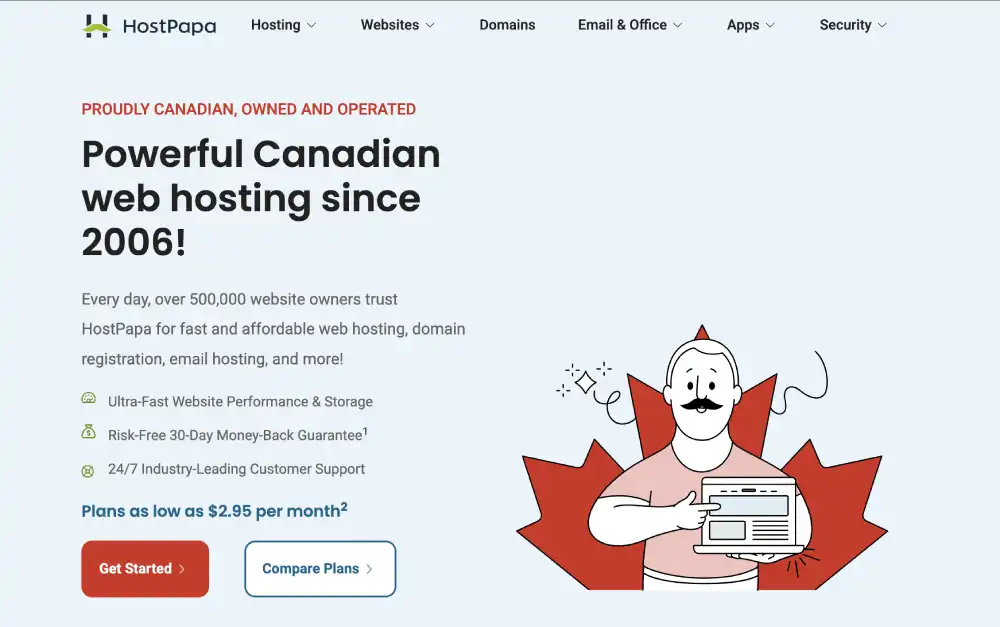
HostPapa purchases 100% renewable energy through wind energy certificates specifically. Their marketing emphasises the wind energy focus, which aligns with customers who care about the type of renewable energy, not just the quantity.
HostPapa operates with a Canadian headquarters and serves a significant Canadian customer base. For businesses in Canada and French-speaking markets with green commitments, HostPapa provides a domestically oriented option.
Plans start at: $2.95 per month (Starter plan)
Namecheap
Who it is for: Budget-conscious individuals who want some environmental consideration in their hosting choice while prioritising low cost.
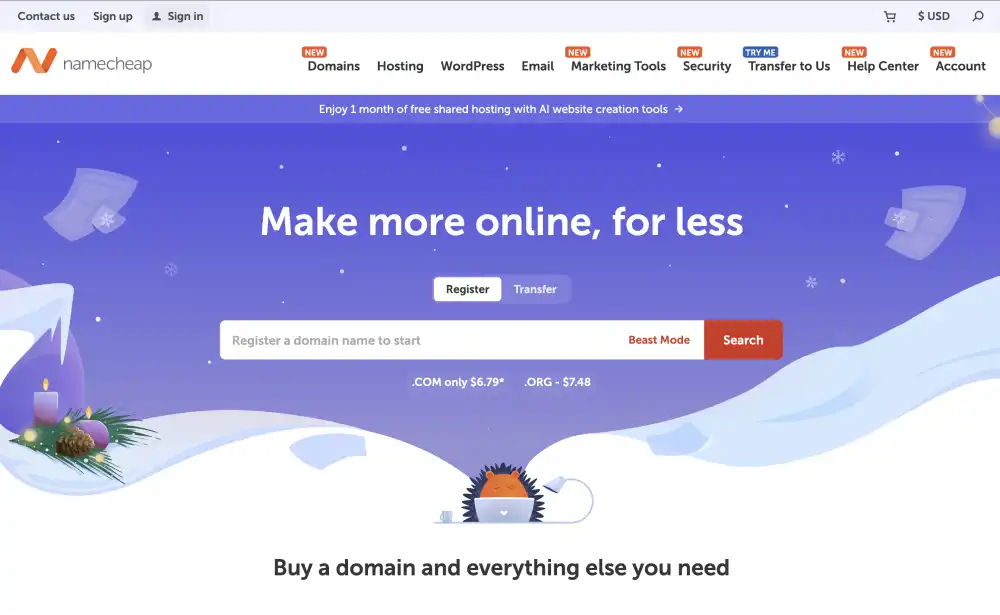
Namecheap offsets carbon through tree planting programmes and has made statements about renewable energy initiatives. Their green credentials are less formally verified than GreenGeeks or DreamHost. For customers for whom cost is the primary driver and green hosting is a secondary preference rather than a core requirement, Namecheap includes some environmental consideration without the premium of dedicated green providers.
Plans start at: $1.98 per month (Stellar shared hosting)
Evaluating Any Green Claim
When evaluating a provider not on this list, ask these questions:
Is the claim third-party verified? EPA Green Power Partner, Green-e certification, or equivalent. Self-reported claims without verification are difficult to assess.
What percentage of consumption is covered? 100% match is the minimum credible claim.
Are they purchasing RECs, carbon offsets, or both? RECs are more directly tied to renewable energy generation. Carbon offsets vary widely in quality depending on the projects funded.
What is their data centre PUE (Power Usage Effectiveness)? A PUE of 1.0 is perfect efficiency. Most data centres operate at 1.2 to 1.5. A data centre claiming green credentials with a PUE above 1.5 is negating some of its renewable energy benefit through inefficiency.
For businesses with formal sustainability reporting requirements, the verification documentation these providers offer supports supplier sustainability assessments. The broader business hosting requirements include documentation needs that apply to environmental claims alongside security and uptime documentation.
Frequently Asked Questions
Does green hosting cost more?
Not significantly at shared hosting pricing. GreenGeeks, DreamHost, and SiteGround are priced competitively with non-green shared hosting. The renewable energy cost at their scale is absorbed into the business model. At dedicated server or cloud tiers, green-certified data centres may carry a small premium.
Can I claim my website is carbon-neutral by using green hosting?
Green hosting covers the hosting component of your website’s carbon footprint. A complete carbon-neutral claim requires accounting for visitor device energy, network infrastructure, and the hosting layer together. Tools like the Website Carbon Calculator estimate the full picture. Accurate claims describe the hosting as renewable-matched rather than making a total website carbon neutrality claim.
What is the EPA Green Power Partner programme?
The EPA Green Power Partner programme in the United States recognises organisations that purchase renewable energy to meet some or all of their electricity needs. Partner status requires meeting a minimum renewable energy purchase threshold and reporting requirements. It is a government-verified programme, not a self-certification.